Saturday, April 10, 2010

Rewriting Tiger's tale


Over my morning coffee, I wanted to take a closer look at Tiger Woods' scores after the first two rounds of The Masters. So I was Googling "Tiger Woods Masters," but never got that far.

Say this much for Google analytics -- they sure are topical. After typing in "Woods," the autofill provided several directions for me to click, including "scandal," "affair," "jokes" and "women."

Go ahead, try it yourself. I'll wait.

After a chuckle, I then continued. The M in "Masters" led me to "mistress," "mistress count," "mistress list," "mother-in-law" and "marriage."

Let me propose a different direction. How about "masterful" or "mind-boggling?" Because if Woods, only two strokes off the lead halfway through The Masters, finishes with one of his patented closing charges to win this thing, this HAS to be the sports story of the year.

It's simply amazing that after 14 months away from the game, with everything he has done and been through, to come back -- at Augusta, no less, where he has won four times and finished second twice -- and be lurking so close to the lead? I mean, how much better is this guy than anybody else out there?

I've said this from day one -- obviously, the first tournament back, no matter when or where it took place, was going to be a feeding frenzy. Granted, Tiger's pre-Masters press conference was an attempt at closure (as opposed to his robotic statement a while back). Yes, it should have taken place a lot sooner, which would have stemmed all the tabloid crap we've seen for months.

Isn't that crisis management 101? Admit a mistake, apologize profusely, promise it'll never happen again and take steps to ensure it doesn't.

Anyway, once Tiger wins his first tournament back -- and there's a very real chance that will happen this weekend -- we'll forget about his infidelity and transgressions. Let's face it, we have very short memories, especially when it comes to our athletic heroes. Does anybody even remember the similar scenario revolving around Kobe Bryant a few years ago? Even in the height of the scandal surrounding Tiger, I don't recall any references to Kobe. How about all the drug users and other miscreants who have gotten several chances to be welcomed back to the sports society, Pac-Man Jones notwithstanding? I mean, wasn't Ray Lewis directly responsible for killing somebody? Nobody ever talks about that, either.

The point is, by golf's greatest player choosing golf's greatest stage for perhaps the greatest comeback we'll ever see, Woods is well on his way to not only forcing the paparazzi to find a new target, but also putting the finishing touches on a new chapter well worth reading.

With an exclamation point, no less.

Wednesday, April 7, 2010

Another Philly phlub?


There's an old saying that says those who forget history are doomed to repeat it. Perhaps the Philadelphia Eagles need to take some remedial courses.

The most stunning aspect of Donovan McNabb leaving the Eagles isn't that he was traded -- although some, like Giants QB Eli Manning, openly questioned the logic of such a move -- but where he was traded to. It's one thing to make a trade in order to make your team better. It's another altogether to make a deal with a division rival, as the Eagles did with the Redskins, leading to a very real and very likely scenario that the transaction will come back to haunt them -- perhaps for a very long time.

The Eagles chose to strike a deal with the Skins, despite the historic precedent that was set back in 1964, when they traded Sonny Jurgensen even-up for another QB, Norm Snead. Jurgensen went on to win three NFL passing championships and was elected to the Pro Football Hall of Fame in 1983. Snead? In seven seasons with Philly, the Eagles had one winning season.

As Jurgensen himself told Ray Didinger of Comcast Sports Net Philadelphia, speaking of the Eagles and their fans, "Those people never learn."

Jurgensen even earned the praise of the legendary Vince Lombardi, who coached Jurgensen in 1969 in Lombardi's only season with the Redskins before he died of cancer.

"He is perhaps the best (quarterback) the league has ever seen,” Lombardi once said. “He’s all man. He stays in there under the most adverse conditions.”

Getting booed by the Philly faithful would qualify in that department, something Jurgensen and McNabb can relate to. Despite being banged up at certain points in his career, McNabb still has plenty in the tank, and it is by no means a stretch to suggest the Eagles could wind up regretting this trade for years to come.

There have been several quarterbacks in NFL history who were traded in their prime and flourished with their new teams, including Fran Tarkenton, Y.A. Tittle and Norm Van Brocklin, but Jurgensen can say he's among the very few who found success playing for a former division rival.

Clearly, McNabb and the Redskins hope for the same.

Tuesday, April 6, 2010

First time not always a charm


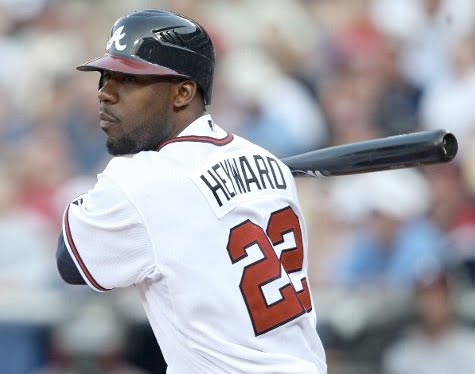
Braves rookie phenom Jason Heyward, above, joined an exclusive club on Monday, as he became the 105th player in Major League history to hit a home run in his first at-bat. Now, all the preseason reports peg Heyward as a "can't-miss" prospect, so unless every scout, scribe, teammate and opponent who ever watched Heyward play are loony, chances are he won't finish his career as a member of another club, one he probably doesn't want to become a card-carrying member of.

That would be one of the 20 players in big league annals who homered in their first at-bat, but never belted another round-tripper again. I won't recount all the names here (gleaned from baseball-almanac.com), since you probably haven't heard of any of them, with the exception of Hoyt Wilhelm, whose best work was done on the mound. It should be noted that Wilhelm is the only Hall-of-Famer on the list.

Here's the quirky part of the story, though: Statistically speaking, Heyward, despite all of his potential, actually has a better chance of joining that group (20 of 104, 19.2 percent) than he does of becoming a member of the 14-player community who homered in their first at-bat and went on to record at least 100 homers (13.5 percent), or the six-player group who went on to join the 200-homer club (5.8 percent).

For the record, here are the 14 players who homered in their first Major League at-bat and hit at least 100 career dingers:

Player, career HR
Gary Gaetti, 360
Carlos Lee, 307
Jermaine Dye, 298
Tim Wallach, 260
Earl Averill, 238
Bill White, 202
Jay Bell, 195
Terry Steinbach, 162
Wally Moon, 142
Bob Nieman, 125
Whitey Lockman, 114
Brad Fullmer, 114
Carmelo Martinez, 108
Marcus Thames, 101

There are two more players on the cusp of making this list: Mike Jacobs of the Mets (99 career HR) and Miguel Olivo of the Rockies (96).

At the other end of the career spectrum, there have been 41 players in big-league history who hit home runs in their final career at-bat, the most notable being Hall-of-Famer Ted Williams in 1960 (that list also includes Albert Belle and Mickey Cochrane).

And 11 of those 41 really went out with a bang, for it was their only career round-tripper. The last player to do it was Chris Jelic with the Mets in 1990.

A big moment for Jelic, certainly, but for few others -- I'm a huge Mets fan and I don't even remember him.

Wednesday, March 31, 2010

It can be slippery at the top


There's plenty of hand-wringing going on among Bruins, Rangers and Thrashers fans today, not to mention a fair share of sweaty palms among Flyers and Canadiens backers too.

That's because of those five teams, only three will still be playing hockey once the Stanley Cup Playoffs begin two weeks hence. As of this morning, any of them can finish as high as sixth in the conference. We could go on and on here hashing and rehashing possible playoff scenarios, but the one slot I'm focusing on is eighth place -- the final playoff berth in the East. Much energy, emotion and blood will be expended for the privilege of landing in that spot and the right to face Alex Ovechkin (above) and the Capitals, regarded by many to be the best team in the NHL.

A fait accompli, you say? One and done? As easy as an empty-netter? Just delaying the inevitable tee time by a few more days? Granted, finishing with the best record in the conference over an 82-game NHL season is a pretty accurate barometer of how talented a team is, and a team that good should be rewarded in the playoffs by getting home ice against a team that, well, isn't as good.

But the top seed advancing into the second round of Lord Stanley's playoffs isn't as much of a cakewalk as you might think. Since the NHL adopted its current 16-team playoff format in 1994, there have been eight instances in 32 first-round series when the eighth-seeded team forced the the No. 1 seeded squad to melt their home ice much earlier than expected.

That's a 25-percent chance for a first-round upset, which might not be enough to make Alex and the Caps shake in their skates, but certainly is enough to give them pause. Here's a rundown of such occurrences:

1994 - Sharks (8) def. Red Wings (1), 4-2.
1995 - Rangers (8) def. Nordiques (1), 4-2.
1998 - Senators (8) def. Devils (1), 4-2.
1999 - Penguins (8) def. Devils (1), 4-3.
2000 - Sharks (8) def. Blues (1), 4-3.
2002 - Canadiens (8) def. Bruins (1), 4-2.
2006 - Oilers (8) def. Red Wings (1), 4-2.
2009 - Ducks (8) def. Sharks (1), 4-2.

You'll notice a few things here; in every case, each series lasted at least six games -- at least the higher-seeded team never went down without a fight. Also, the Devils and Red Wings were each victimized in this scenario twice, with the Devils unfortunate enough to suffer a stunning elimination in two successive seasons. The Sharks actually pulled off the coup twice, but are the only team to have the tables turned on them -- by the Ducks a year ago.

You may be wondering how well eighth-seeded teams fared after securing their opening-round shockers. Ultimately, not that well. The 2006 Oilers came within one game of becoming the only eighth-seed to win the Stanley Cup, but they fell in the Finals to the Hurricanes in seven games.

All of which means Ovie and the Caps better keep their heads up, else they could find themselves trading in their sticks for five-irons.

Sunday, March 28, 2010

The bad seed


Admit it. When you were filling out your brackets before the Madness of March officially began, you really didn't want to hand one in that had all four No. 1 seeds headed to the Final Four. Because if you did, you'd be banking on something that has happened only ONCE since the NCAA began seeding tournament teams in 1979.

Sounds logical, doesn't it? You'd think choosing ostensibly the best four teams in the land to reach the Final Four would be the way to office pool superstar.

Fact is, we all know the only way to have a shot at ascending to that atmosphere is to be lucky enough to nail those upsets we know are coming (see Butler, Northern Iowa, Cornell and St. Mary's). It's just that nobody knows where and when the sneaker will drop. One reason is because it's simply so rare when the top four seeds in the tournament are that much better than many of the other 60 teams playing for the national championship. Also, every opponent will be playing in the biggest game of their lives, and every time a top seed takes the floor, everyone's looking to knock them off.

At least the Lehighs, Vermonts and Arkansas-Pine Bluffs made it to the party this time, which is more than can be said for the likes of frequent dancers UConn, North Carolina, UCLA, Indiana and Arizona. But that's another story for another time.

The only year all four top seeds made it to the Final Four was 2008, when Kansas, Memphis, North Carolina and UCLA all survived their regions, with Mario Chalmers and the Jayhawks eventually winning it all.

With all the upsets in this year's tournament, it got me thinking about Final Fours that didn't feature ANY top-seeded teams. Had Baylor hung on to oust Duke in the South Region Final last night, it not only would have clinched winning the bracket pool I entered (sorry for digressing), but it would have marked the third time since 1979 that the Final Four contained no top seeds. It happened in 2006, when UCLA (2), Florida (3), LSU (4) and Cinderella George Mason (12) made it, with the Joakim Noah-led Gators winning it. Before that, you have to go all the way back to 1980, when Louisville (2), Iowa (5), Purdue (6) and UCLA (9) vied for the title, eventually taken by Darrell Griffith and the Cardinals.

So, hard as it may be to believe, it's statistically more likely that the Final Four will be comprised of NO top seeds (twice) than it is to have ALL top seeds (once). Chew on that when you're handed your empty bracket for the 2011 Final Four.

As it is, the Dukies are the only top-seeded team headed to Indianapolis, a scenario that has occurred 10 times prior. Of those 10 Final Fours, the lone No. 1 seed has won the championship five times (Michigan State in 2000, UCLA in 1995, Arkansas in 1994, Duke in 1992 and UNLV in 1990). So statistically speaking, the Devils have a 50 percent chance of cutting down the nets a week from tonight.

We'll see what Michigan State, Butler and West Virginia have to say about that.

Friday, March 26, 2010

Three you later


I was all set to write this morning about how the common script usually unfolds during the NCAA Tournament: Inspired, nothing-to-lose lower-seeded team takes early lead against higher-seeded, playing-on-their-heels higher-seeded team. Lower-seeded team, forgetting what got them to this point, gets greedy and begins to fire up a barrage of misguided 3-point shots that find nothing but rim. Higher-seeded team grabs rebound, ignites fast break and scores in transition, cutting into lower-seeded team's lead.

Repeat until higher-seeded team collects itself and wins.

Quick digression: I'm reminded of a scene from when I covered the Pat Riley-led Knicks in the mid-'90s. The Knicks were playing the Sixers in Philly, and our media seats were on the baseline, about 15 feet from the Knicks bench. Greg Anthony, now a commentator on ESPN and then a sometimes-undisciplined point guard, dribbled the ball up court. With about 19 seconds left on the shot clock, Anthony threw up a ridiculous 3 attempt that bricked off the rim. The Sixers got the rebound, flew down court and scored on the fast break. Riley immediately called time. As the Knicks sat in front of him, Riley said nothing, glaring at Anthony. Finally, with the 30-second break about to expire, Riley screams at Anthony, "What the f--- were you thinking?!?" With that, the buzzer sounded and the Knicks quickly retook the floor.

Back to the present. The scenario at the beginning of this post unfolded twice Thursday night; Xavier connected on only 12 of 28 from 3-point range in a double-OT loss to Kansas State (8-for-19 from 3), and the erstwhile-Cinderella Cornell was only 5-of-21 as it was ousted by mighty Kentucky (only 2-of-16 from 3).

Leave it to someone to buck the trend, though. The Butler did it.

The Bulldogs shot 6-of-24 from beyond the arc against Syracuse, but the Orange -- taking its usual bracket misstep -- fell prey to Butler's defense and was outscored 11-0 down the stretch on the way to a 63-59 elimination. Syracuse, the best 3-point shooting team in the NCAA during the regular season (7-for-19 on Thursday), thus joins Kansas as top-seeded tourney teams that will be watching the Final Four from their living rooms.

So keep a keen eye on the 3-point numbers on Friday -- especially from upstarts Northern Iowa (vs. Michigan State) and St. Mary's (vs. Baylor).

And we'll see if these longshots keep shooting short from far away.

Wednesday, March 24, 2010

Flipping out over overtime


This should have been easy. This shouldn't have taken hours of meetings, blocking the schedules of NFL owners and staffs for a month and reporters chasing down those same harumphing owners down hallways of hotels to get sound bites.

The new NFL rule changes regarding overtime were finally voted on by the owners between harumphs Tuesday, and passed 28-4. So what does it all mean in Week 4 of the 2010 season, when, say, the Giants and Cowboys finish regulation all tied up?

Not a thing.

For years, we heard about how the team who wins the coin flip for overtime usually wins in the NFL -- and over the past 10 seasons, that's happened about 60 percent of the time. The most common scenario is a team receiving the kickoff to start OT, drive about 40 yards or so and kick a winning field goal.

So with a chance to level the playing field, so to speak, and make OT a fairer proposition, the NFL decided to change its overtime rules, allowing the above scenario to not end games from now on. Instead, the team scored upon will then get a possession to try to tie the game with a field goal or win with a touchdown (if the team with the first possession scores a TD, the game is still over).

But that will only happen in the POSTSEASON. The regular season will still be same-old, same-old, nothing to see here.

One reason given by some owners for the status quo was that they didn't want to see the chances of injury raised by adding more time to regular-season games, but that skirts the real issue.

The NFL had a great opportunity here, and quite frankly, they booted it wide right. The obvious way to go was a direction that I've seen little written about around the internet, except just mentioned in passing on a couple of random blogs I saw.

As Lee Corso says in my favorite video game of all time, NCAA 06, "I love overtime in college football." The only argument you'll get from me here is that the NFL should have adopted the same rules used to break overtime in the NCAA since 1996 -- give each team a set of untimed downs from the opposing 25-yard-line, with ensuing possessions until the tie is broken. Starting with the third set of possessions, teams must attempt a two-point conversion rather than kicking the extra point.

Overtime in the NCAA is exponentially more exciting than the NFL variety, and remains so even after all the time and energy spent by the NFL to simply tweak their current rules. The significance of the NCAA coin toss is that the winner will most often choose to play defense first in order to get "last licks" and know exactly what they have to do in order to win on the opening possession. In succeeding possessions, the order is swapped.

I tried to research it, but couldn't find any tangible reasons why the NFL didn't simply adopt the far superior settlement of OT games used by their collegiate counterparts. Could it simply be that doing so would have made the NFL admit the college way was better all along? I really hope there's more to it than that.

The fear of injury? Over adding one or two more series a game? Come on.

There was no reason the NFL couldn't easily split the uprights on this one. But somehow, they shanked it.